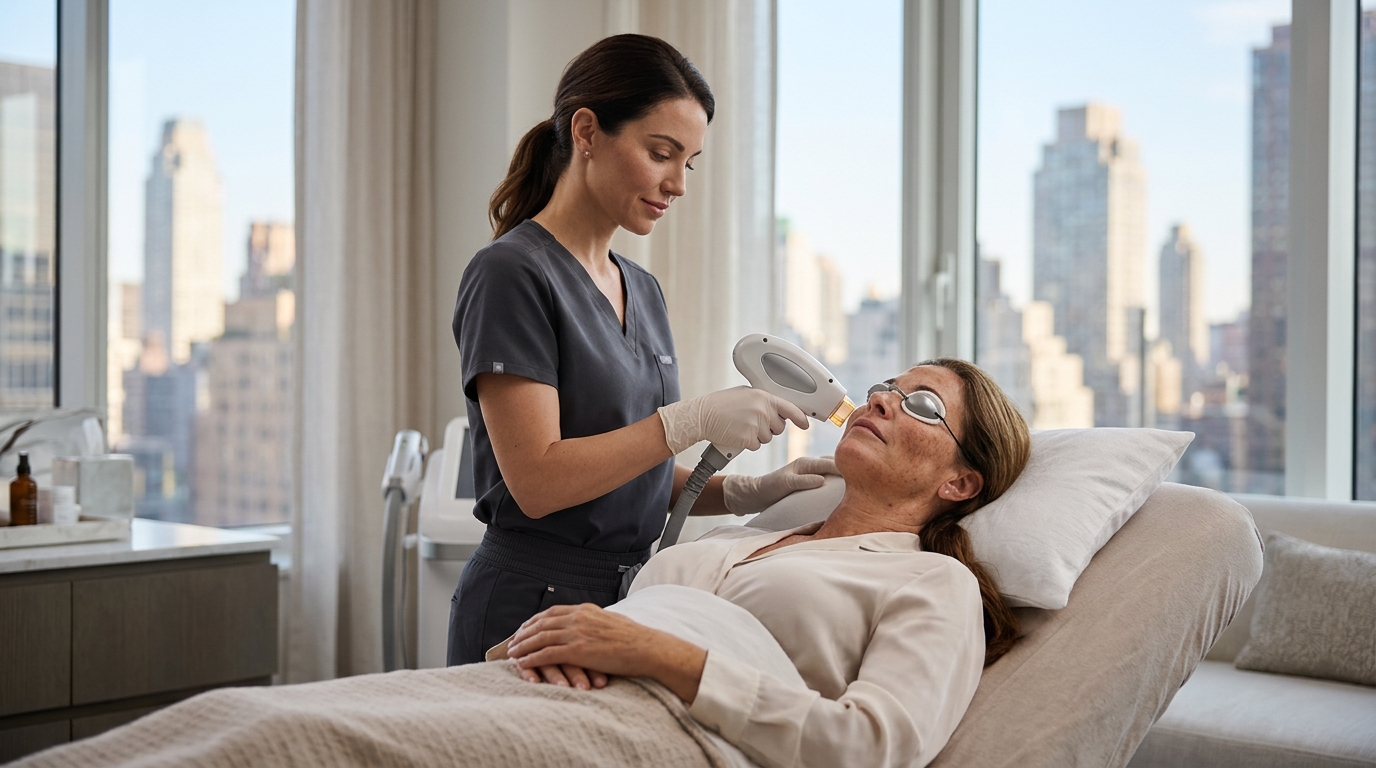
Intense Pulsed Light (IPL) is a non-invasive laser therapy that targets excess melanin to fade sun spots, melasma, and uneven skin tone. In New York City, you can receive this treatment at medical spas, dermatology offices, and aesthetic clinics. This guide explains how to choose a safe provider, what to expect during the procedure, and how to verify credentials to ensure you get effective, safe results.
How to Choose a Provider
Selecting the right clinic is the most critical step in achieving safe and effective pigment removal. A reputable medical spa prioritizes medical oversight and transparent communication. You should look for a facility where a licensed medical professional, such as a physician or nurse practitioner, is available to consult and supervise treatments. This ensures that your skin type and medical history are properly assessed before any laser is applied. For additional details, review the About Us Med Spa.
Medical Oversight vs. Aesthetic-Only
Many spas in NYC operate without direct medical supervision. While some are excellent, the risk of adverse reactions is higher when no medical professional is on-site to manage complications. At Perfect Med Spa, treatments are performed in a medical environment, ensuring that safety protocols are strictly followed. This distinction is vital for procedures like IPL, which involve energy-based devices that can cause burns if misused. For additional details, review the Medical Spa Reviews New.
Technology and Experience
The specific brand of IPL device matters. Older or generic devices may lack the safety filters necessary for diverse skin tones. Experienced providers use FDA-cleared platforms with multiple filters to target specific wavelengths of light. Ask about the specific technology they use and how long they have been operating it. A provider who can explain the physics of light absorption in simple terms is usually a safer bet than one who relies on marketing buzzwords. For additional details, review the Med Spa Patient Sign.
What to Ask Before Committing
Do not book a treatment without asking specific, technical questions. These questions help you gauge the provider's expertise and their willingness to be transparent. If a provider hesitates or gives vague answers, it is a red flag. For additional details, review the Payment Plans Perfect Med.
- What is your Fitzpatrick skin type assessment? This determines if you are a candidate for IPL. Darker skin types require different settings or may not be candidates for traditional IPL.
- What specific filters or wavelengths do you use? This shows they understand the science behind pigment targeting.
- Who will be performing the treatment? Ensure it is a trained professional, not an unlicensed technician.
- What are the potential side effects? A good provider will discuss risks like temporary redness, blistering, or changes in pigmentation.
- How many sessions are typically needed? Pigment removal rarely happens in one session. Expect a series of treatments.
How to Verify Credentials
In the aesthetic industry, titles can be misleading. "Medical Director" or "Supervising Physician" titles should be verified. You can check the New York State Education Department or the New York State Office of the Attorney General to verify medical licenses. For non-physician providers, check if they are licensed as Licensed Practical Nurses (LPNs) or Licensed Vocational Nurses (LVNs) in New York.
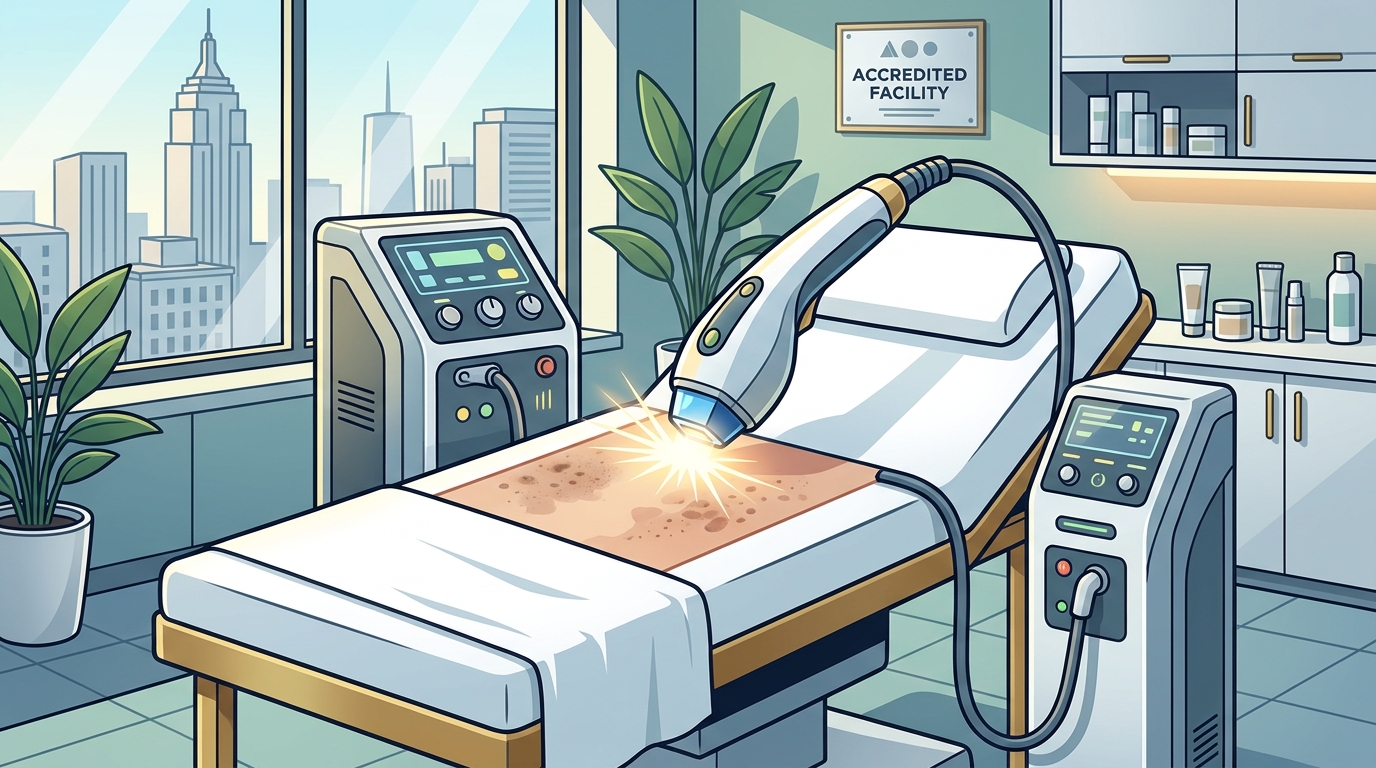
Additionally, verify the clinic's accreditation. Look for signs of compliance with local health department regulations. A legitimate medical spa will not mind you asking for proof of licensure. If they refuse, walk away. You can also check online review platforms, but focus on reviews that mention specific outcomes and safety rather than just general praise.
How IPL Works
IPL is a broad-spectrum light therapy that emits pulses of light at specific wavelengths. The light energy is absorbed by the melanin in the pigment spots. This energy converts to heat, which destroys the pigment cells. The body then naturally eliminates the dead pigment cells over the following weeks. The surrounding healthy skin is spared because it reflects the light rather than absorbing it.
The Treatment Process
During a session, a cooling gel is applied to the skin. The technician then glides a handpiece over the treatment area. You will feel a sensation similar to a rubber band snapping against the skin. The entire process for the face typically takes 20 to 30 minutes. There is no downtime, though the skin may look like a sunburn for a few days.
Session Frequency
Most patients require 3 to 6 sessions, spaced 4 to 6 weeks apart. This interval allows the skin to heal and the body to clear the pigment. Consistency is key. Skipping sessions can reduce the overall effectiveness of the treatment plan.
What It Costs
Common Mistakes to Avoid
One of the most common mistakes is not protecting your skin from the sun before and after treatment. Sun exposure increases melanin production, which can counteract the effects of IPL and increase the risk of post-inflammatory hyperpigmentation. You must use a broad-spectrum sunscreen with SPF 30 or higher daily, even on cloudy days.
Another mistake is expecting immediate results. IPL works gradually. The pigment spots may darken before they flake off. This is a normal part of the process. Do not pick at the skin, as this can lead to scarring or infection. Finally, avoid other exfoliating treatments or retinoids for a few days before and after the session to prevent irritation.
IPL vs. Alternatives
IPL is one of several options for pigment removal. Understanding the differences helps you choose the right treatment for your specific concern.
| Treatment | Best For | Downtime | Skin Type Suitability |
|---|---|---|---|
| IPL | Sun spots, redness, general tone | Minimal (redness for 1-3 days) | Fitzpatrick I-IV (Light to Medium) |
| Laser Toning (Q-Switched) | Stubborn melasma, deep pigment | Minimal | More versatile for darker skin |
| Chemical Peels | Surface pigment, texture | Peeling for 3-7 days | All skin types (with caution) |
| Microneedling | Scars, texture, collagen | Redness for 2-3 days | All skin types |
IPL is generally less aggressive than ablative lasers, making it a good first step for many patients. However, for deep melasma, a combination of IPL and topical treatments or laser toning may be more effective. A consultation at a medical spa can help determine the best approach for your skin.
For Specific Skin Types
IPL is most effective on lighter skin tones (Fitzpatrick types I-III). For medium skin tones (Type IV), it can be used with caution and specific filters. For darker skin tones (Types V-VI), traditional IPL carries a higher risk of hypopigmentation (lightening of the skin) or hyperpigmentation. In these cases, providers may recommend alternative lasers that target pigment more selectively, such as Nd:YAG lasers. Always disclose your skin type and any history of hyperpigmentation during your consultation.
Rules and Protections
New York State has specific regulations regarding who can perform laser treatments. Generally, laser treatments must be performed under the supervision of a licensed medical professional. This ensures that there is a medical standard of care in place. Patients have the right to informed consent, which means you should receive a clear explanation of the risks, benefits, and alternatives before signing any forms. You also have the right to privacy regarding your medical records and treatment history.
Local NYC Specifics
Timing Your Treatment
Timing is essential for successful IPL. The best time to start is in the spring or early summer, allowing you to complete your sessions before the peak sun exposure of late summer. However, you can treat year-round if you commit to strict sun protection. Avoid scheduling treatments if you are currently sunburned or have recently tanned. It is also advisable to avoid treatments during pregnancy, as the safety of laser energy on pregnant women has not been fully established.
Results Over Time
Immediate results are not visible. The treated pigment spots will darken and eventually flake off over 1 to 2 weeks. The true results become apparent after 4 to 6 weeks, when the skin has fully healed and the pigment has been cleared. With a full course of treatment, most patients see a significant improvement in skin tone and texture. Maintenance sessions are recommended once or twice a year to prevent new pigment from forming due to sun exposure. Consistent use of sunscreen is the single most important factor in maintaining long-term results.
Key Takeaways
- Choose a medical spa with licensed medical supervision to ensure safety.
- Verify the provider's credentials and the technology they use.
- IPL is most effective on lighter skin tones; darker skin may require alternative lasers.
- Expect 3 to 6 sessions spaced 4 to 6 weeks apart for optimal results.
- Strict sun protection is mandatory before and after treatment.
- Results are gradual, with full effects visible after 4 to 6 weeks.
- Always ask for a written quote and informed consent before treatment.
Frequently Asked Questions
Is IPL safe for all skin types?
IPL is generally safe for Fitzpatrick skin types I-IV. For types V and VI, the risk of pigment changes is higher, and alternative lasers may be recommended. A consultation is necessary to determine your candidacy.
How many sessions do I need for pigment removal?
Most patients require 3 to 6 sessions. The exact number depends on the depth and extent of the pigmentation. Your provider will assess your skin and recommend a personalized plan.
Does IPL hurt?
The sensation is often described as a rubber band snapping against the skin. Most patients tolerate it well, and cooling gels or devices are used to minimize discomfort.
Can I go out in the sun after IPL?
You should avoid direct sun exposure for at least a week after treatment. Daily use of broad-spectrum sunscreen is essential to protect the treated skin and prevent new pigment from forming.
How much does IPL cost in NYC?
What is the difference between IPL and laser toning?
IPL uses broad-spectrum light, while laser toning uses a specific wavelength (often Q-switched) to target pigment more selectively. Laser toning is often preferred for darker skin types or stubborn melasma.
Where can I find a reputable IPL provider in NYC?
Look for medical spas with licensed medical directors. Perfect Med Spa offers IPL treatments in a medical setting, ensuring safety and quality care.